Finding Peace with Mortality: What Death Therapy Looks Like
“Though the physicality of death destroys us, the idea of death may save us.”
— Irvin D. Yalom
Death is one of the few things every single one of us will face.
And still — most of us spend much of our lives trying not to think about it.
Until something happens that makes it impossible not to.
A loss.
A diagnosis.
A panic attack in the middle of the night.
A child being born.
A parent aging.
The moment that death stops feeling abstract.
And when that happens, people often realize they’re carrying questions and fears they’ve never had space to talk about.
That’s where death therapy can come in.
Death therapy may sound unusual at first, but in practice, it’s simply therapy that makes room for the emotional, existential, and practical realities of mortality.
It’s a space to talk honestly about death, grief, fear, meaning, unfinished business, and the parts of being human most people spend their lives trying to avoid.
What Is Death Therapy?
Death therapy is a form of psychotherapy focused on helping people process the emotional, psychological, relational, and existential realities of death and mortality.
That may include:
grieving the death of someone you love
anticipating the loss of a loved one
facing your own mortality after illness or diagnosis
wrestling with fear of death or dying
confronting existential questions about meaning, purpose, and legacy
processing trauma related to death, dying, or loss
In other words:
Death therapy is not just grief counseling.
It is therapy that helps people face mortality in all its forms.
Death Therapy Is Not Just for People Who Are Grieving
One of the biggest misconceptions about death therapy is that it’s only for people whose loved one has already died.
But many people seek death-focused therapy before any immediate loss.
Because mortality has a way of surfacing long before death itself arrives.
People often come to this work when:
they can’t stop thinking about death
they’re terrified of losing loved ones
a health scare shattered their sense of invincibility
becoming a parent heightened their fear of impermanence
aging has made mortality feel more real
they’re facing a terminal diagnosis
they witnessed death in a traumatic way
they’re realizing life is finite and questioning how they want to live
Sometimes death therapy is less about grief and more about this question:
How do I live fully while knowing everything is temporary?
Why Mortality Can Suddenly Feel So Much Harder to Ignore
For many people, thoughts about death become louder during major life transitions.
You may notice mortality hitting harder when:
you fall deeply in love
you become a parent
you lose someone close
your parents age
you face illness or chronic pain
you achieve major life goals and realize time keeps moving anyway
trauma makes the world feel less predictable
Because often…. what awakens mortality awareness is not death itself…
It’s becoming more aware of how much there is to lose.
The Existential Questions Death Brings Up
Death has a way of forcing us into questions most people spend years avoiding.
Questions like:
Have I lived fully?
Am I wasting my life?
What really matters to me?
What happens when we die?
How do I tolerate not knowing?
What if I never become who I wanted to be?
How do I accept that everything I love is temporary?
These are not pathological questions. They’e not morbid or pessimistic.
They’re deeply human ones. Important ones.
And for many people, death therapy becomes a place to finally explore them honestly.
The Fear Beneath the Fear of Death
When people say they’re afraid of death, the fear is usually more layered than it first appears.
Sometimes it’s fear of:
pain or suffering
loss of control
leaving loved ones behind
unfinished life
regrets
being forgotten
nonexistence
uncertainty
watching others suffer
unresolved spiritual questions
Part of death therapy is gently exploring:
What does death symbolize to you?
What feels most unbearable about it?
Because often, understanding the fear changes your relationship to it.
The Unspoken Question: Have I Lived Fully?
Irvin Yalom wrote:
“The fear of death is always greatest in those who feel they have not lived fully.”
Whether or not that is universally true, many people notice that death anxiety intensifies when they feel disconnected from how they actually want to live.
When mortality becomes real, people begin asking:
Am I living in alignment with what matters to me?
Have I become the person I hoped to be?
What am I postponing because I assume there will always be more time?
Death therapy is not about obsessing over death.
It is often about using awareness of death to clarify life.
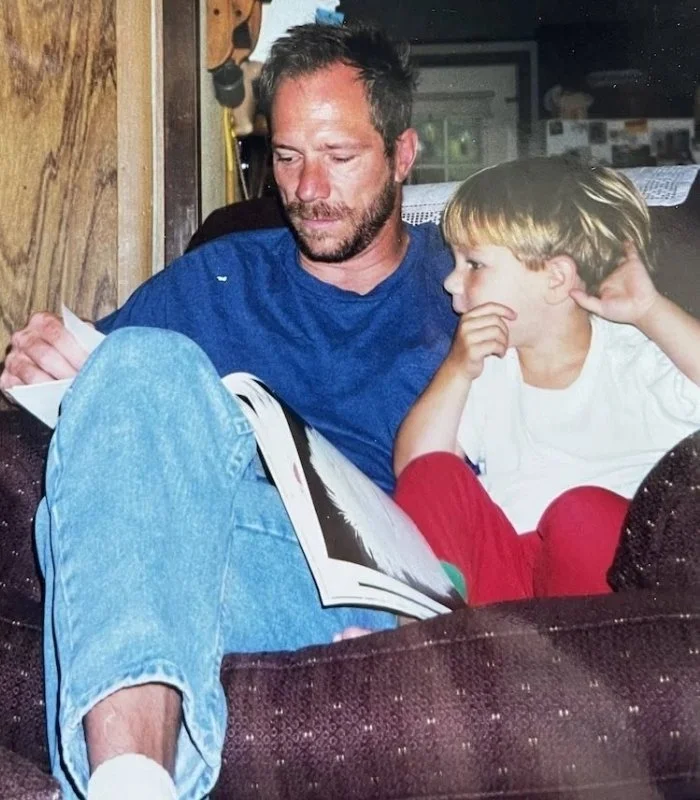
My brother and dad — two losses that shaped both my life and the work I do today.
My Personal Connection to This Work
This work is deeply personal to me.
I lost my baby brother to cancer when I was 20.
I lost my dad to suicide when I was 30.
Those losses changed me.
They shaped not only my understanding of grief, but my relationship to mortality itself.
They taught me firsthand how death can fracture your world — and how it also fundamentally alters the way you move through life.
That personal experience is part of what draws me to this work.
Not because I believe shared loss is required to help someone heal.
But because I know how death can reshape a person from the inside out.
And I know how much it matters to have space to talk about it with someone who is not afraid to go there with you.
The Role of EMDR in Death Therapy
While death therapy often includes existential, relational, and meaning-centered work, EMDR therapy can be especially helpful when mortality or grief is intertwined with trauma.
EMDR may support people who are struggling with:
traumatic loss
witnessing a death
sudden or violent death of a loved one
medical trauma related to terminal illness
intrusive memories surrounding a death
unresolved guilt or unfinished business
trauma responses that complicate grief
EMDR is not always the primary modality in death work.
But when trauma is present, it can be a powerful tool for helping the nervous system process what happened and reduce the emotional intensity of painful memories.
What Making Peace With Mortality Actually Means
Making peace with mortality does not mean:
never fearing death again
pretending loss doesn’t hurt
having every spiritual question answered
becoming perfectly “zen” about impermanence
It often means something much more human than that.
It means:
Learning to tolerate uncertainty
Letting mortality sharpen your clarity instead of only your fear
Grieving what is temporary while loving it anyway
Building a life you feel more at peace having lived
Carrying awareness of death without being consumed by it
Peace with mortality is not usually the absence of fear.
It is a different relationship to fear.
You Don’t Have to Face Mortality Alone
Death is universal.
But that doesn’t make facing it easy.
Whether you are grieving, confronting your own mortality, terrified of losing someone you love, or wrestling with the existential weight of being human…
You do not have to carry those questions alone. You don’t have to figure it out.
Death therapy offers a space to speak honestly about what most people avoid.
To grieve.
To fear.
To question.
To process.
To find meaning.
To make peace, slowly, in your own way.
Ready for Support?
If you’re navigating grief, mortality, existential fear, or the emotional impact of death and dying, therapy can help.
Let’s start with a conversation to talk about death therapy.